South Carolina · An Independent Solar Guide
How would you like to own your own power plant?
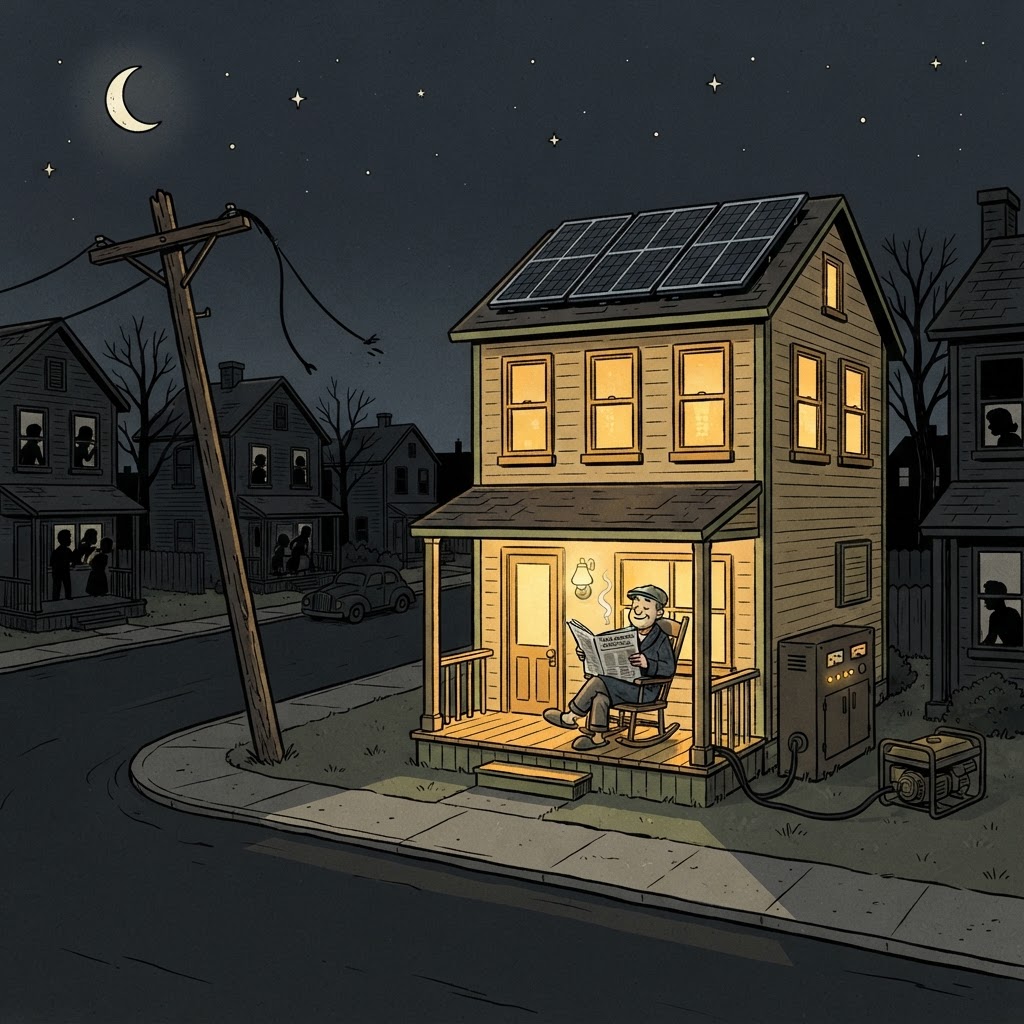
That's what a solar PV system is: a power plant on your roof that you own. Add battery backup, or connect a transfer inverter and tie in your generator — the design is flexible. Either way, the end goal is the same: your own power plant, producing power you own instead of renting it.

Live South Carolina Solar Generation
Crowd-sourced from connected systems across the Palmetto State
Live From Real Rooftops
South Carolina Homeowners Are Generating Right Now
Homeowners across the state have connected their solar systems to Why Solar SC. This is their combined, real-time generation — updated every few minutes.
The Case
Renting power from someone else's plant is the default. Owning yours is the alternative.
From your wallet to your community, a power plant of your own delivers benefits that compound every year the sun comes up.
Energy Independence
- 01SC is heavily dependent on out-of-state fossil fuels — solar changes that.
- 02Solar + battery storage protects your home from grid outages and rate hikes.
- 03Localize energy production at the home and community level.
- 04Take control of your electricity — no more surprise bills from Duke Energy or Dominion.
The Big Picture
What would it take to power South Carolina on solar?
South Carolina consumes ~100 billion kWh annually. Here's what a statewide investment in owned generation could look like.
The Economics of Owning
Your monthly payment is the installment plan on a power plant you own.
If you finance, your monthly payment isn't just another bill — it's the installment plan on a power plant you own. And when you pay it off? You still have a power plant. It works like a car loan: when you pay off a car, you still have a car. The difference is what the asset does after payoff — your power plant keeps producing every month, while you stop paying the utility's markup, taxes, and rate increases on the power it makes.
This is more within reach than most people assume. Think about the first car families buy for their teenagers — plenty of those kids are driving $60,000 vehicles. A rooftop power plant that covers the house costs less, and unlike the car, it doesn't lose half its value in five years.

That's what an investment in solar actually is: the ideal, made real and permanent.
It's a strategic way to set up your own energy independence, with the economic benefits that follow.
Side by side: two ways to spend ~$28,000
A New Car for Your Teen
5-year total cost of ownership
After five years: a depreciating asset that still carries insurance, gas, and a monthly payment of its own.
A Power Plant for Your Roof
Similar investment, opposite outcome
After payoff you still own a power plant — one that keeps producing for 25+ years.
The average Columbia, SC household pays $156/month for electricity — $1,872/year, every year, for as long as you rent your power. A rooftop power plant is the one major home investment that directly replaces that bill, adds to your property value, and keeps producing long after it has paid for itself.
Columbia, SC averages: 1,069 kWh/mo · $156/mo electric bill · 4.8 peak sun hours/day · Recommended system: 9–9.5 kW
Size Your Power Plant
Pre-loaded with Columbia, SC averages. Adjust any value to personalize the numbers.
Start with your monthly electric bill — or enter kWh directly
Your numbers
Financing: the installment plan
The payment below isn't a bill for power — it's the payoff schedule on a plant you'll own outright.
Typical solar loans: 6.99–9.99% APR
Total interest over the loan: $9,412 · After payoff, the plant keeps producing for 13+ more years — with no payment at all.
Flexible by Design
Choose the configuration that fits your home and budget.
Every property is different, and the system design adapts: roof or ground, house or business, with battery backup or without. Explore the configurations available to SC homes and businesses.
Residential Roof Mounts
The most common configuration for SC homes. Panels are mounted directly on your existing roof structure.
5–12 kW typicalResidential Ground-Mounted
Ideal when your roof isn't suitable due to age, shade, or orientation. Pole or rack mounted in your yard.
6–15 kW typicalCommercial Ground-Mounted
Larger scale systems for farms, businesses, churches, and schools. Higher returns per dollar invested.
25–500+ kW typicalSolar Coverings & Carports
Solar canopies over parking lots, driveways, patios, and pools. Dual purpose: shade plus generation.
10–100+ kW typicalFlexible by Design
Design your power plant around your life.
Pair your power plant with battery backup for whole-home coverage, or connect a surge-rated transfer inverter and tie in your existing generator. You choose the configuration that fits your home and budget.
When the grid goes down
Outages are a regular fact of life in South Carolina — hurricanes and ice storms, summer heat waves, and lines that were built for a smaller state. With a battery bank, or a surge-rated transfer inverter tied to your generator, your lights stay on while the block goes dark. Customization is the point: every home chooses its own configuration.
Battery Backup
- 01Powers your home during grid outages — critical for SC hurricane and ice storm season
- 02Stores excess daytime generation for nighttime use
- 03Works with Tesla Powerwall, Enphase IQ, SolarEdge, and more
- 04Reduces dependence on net metering if utility rates change
Generator & Transfer Inverter
- 01A surge-rated transfer inverter lets your existing generator charge the same system
- 02Two independent layers of backup: battery first, generator as extended reserve
- 03Keeps well pumps, HVAC, and refrigeration running through extended outages
- 04Uses equipment you may already own — no need to start from scratch
EV Charger Integration
- 01Your own generation charges your car at roughly $0/mile in fuel costs
- 02A Level 2 home charger integrates directly with your solar inverter
- 03Smart load management charges during peak sun hours
- 04As SC EV adoption grows, your power plant is already sized for it
How the system connects
Questions, Answered
Frequently Asked Questions

Our Mission
Why Solar SC exists to help South Carolina homeowners future-proof their own energy — and, home by home, future-proof the grid itself. Every rooftop power plant means one less home pulling on an aging system, one more family that keeps its lights on when the lines come down, and one more household keeping its money instead of sending it upstream. Scale that to a town, a county, the state: a stronger grid, a better quality of life, and a real local economy.
This transition is heavily dependent on electricians and people familiar with high voltage — the same skilled trades that run today's energy model. Based on our experience in the field, many current energy-sector employees will find room for higher salaries in this emerging market, and many will start their own small businesses serving it. The economic benefit doesn't stop at your meter.